
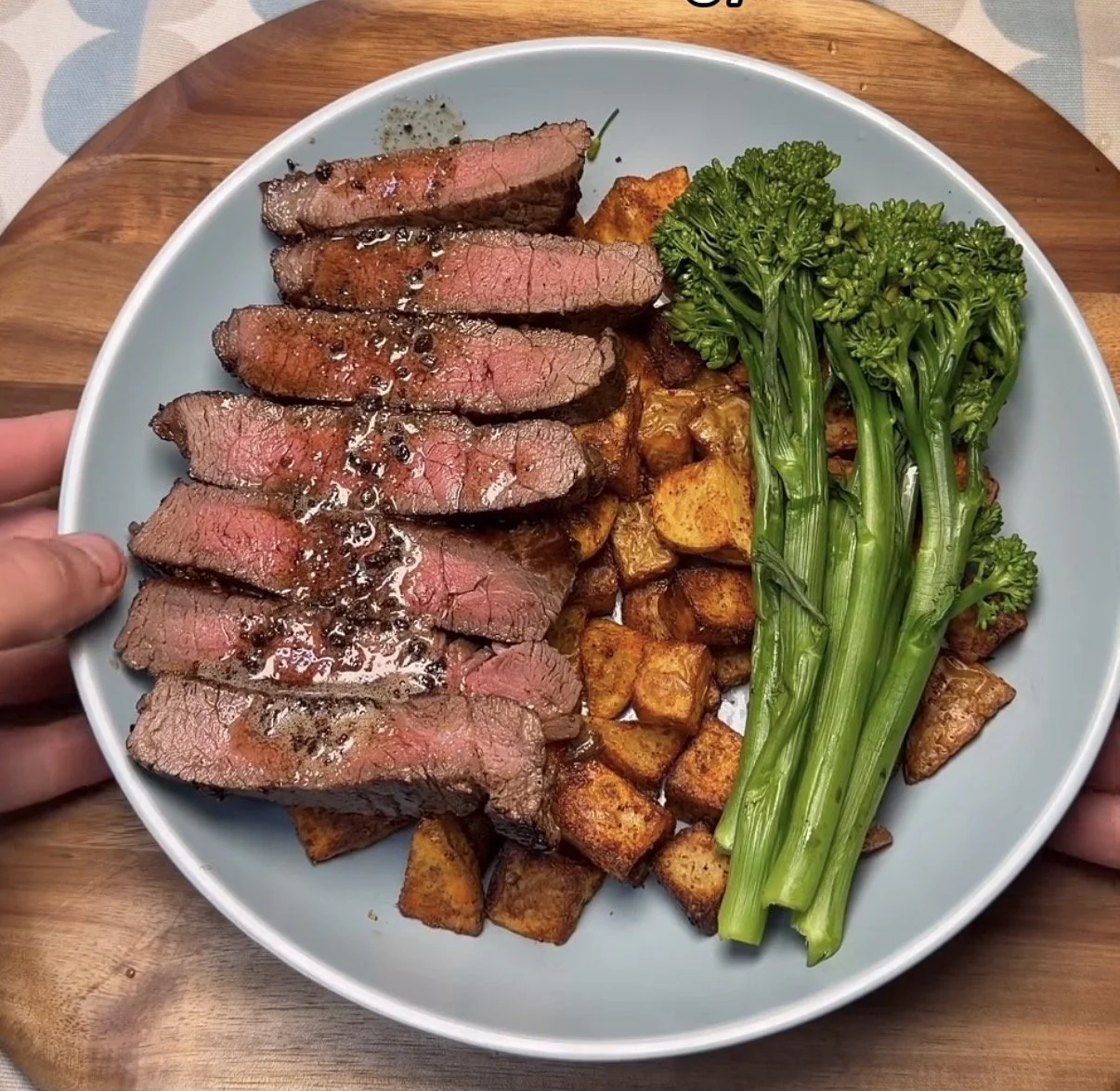
What should teenagers eat to build muscle? A simple guide
No meal plans, no counting every gram. Just how to build a plate that fuels growth, training and normal life, in four steps.
Quick answer: Teenagers who go to the gym should eat enough food, eat a mix of foods and do it most of the time. Build each meal from four parts: a protein, a carb, some fruit or veg and a bit of healthy fat. Include protein regularly through the day. Don’t cut out carbs. Drink water throughout the day. You don’t need supplements or a perfect diet, just a good enough one, repeated.
When you start the gym, food suddenly becomes confusing. One video says cut carbs. Another says eat 4,000 calories. Someone at school is living on chicken and broccoli.
At 16 to 19, food does a lot more than change how you look. Your body uses it for growth, bones, hormones, concentration, training, sport and recovery. The aim isn’t a perfect diet. It’s giving your body what it needs most of the time.
How much should a teenager who trains eat?
Enough. That sounds vague, but it’s the most important rule.
Your food needs depend on your size, sex, activity, sport, training and stage of development. Training and sport raise the amount of energy you use. During growth spurts, appetite and food needs can go up a lot.
Eating too little for a long time can affect recovery, performance, bone health and normal body function, in boys and girls. So if you’re hungry, eat. Regular meals, not skipping them, is a good place to start.
Protein, carbs and fats: what each one does
These three are called macronutrients. Your body needs all three, and cutting one out doesn’t speed anything up.
Protein: helps build and repair
Chicken, turkey, beef, fish, eggs, milk, Greek yoghurt, cottage cheese, beans, lentils, tofu
Carbohydrates: Provide energy
Rice, potatoes, pasta, bread, oats, cereal, fruit, beans and pulses
Fats: Support normal health
Nuts, seeds, olive oil, eggs, avocado, oily fish
The easiest way to remember it: protein builds, carbs fuel, fats keep everything working.
How much protein does a teenager need?
You don’t need enormous amounts, and you don’t need protein shakes. Include a protein source with your main meals and spread it through the day. If every meal and most snacks have some protein in them, you’re doing the job.
Are carbs bad?
No. Carbs are an important source of energy, especially if you train or play sport. They help fuel your sessions and refill what you used. More active days naturally need more food than quiet ones.
Do I need to cut fat?
No. Fat is an essential part of your diet. Your body uses it for growth, hormone production, brain and cell health, and absorbing certain vitamins. Trying to strip almost all fat out of your diet isn’t necessary, especially while you’re still developing. Oils, nuts and nut butters carry a lot of energy, so small portions are usually enough.
How to build a simple meal in four steps
1. Choose a protein (chicken, beef, fish, eggs, Greek yoghurt, beans)
2. Add a carb (rice, potatoes, pasta, bread, oats)
3. Add fruit or veg (broccoli, peppers, carrots, green beans, berries, banana)
4. Include some fat (eggs, nuts, olive oil, avocado, oily fish)
Then have a drink with it. Example: chicken, rice, mixed vegetables, a drizzle of olive oil and a glass of water. It really can be that simple.
Not every meal has to tick every box. Aim to get the balance right across the whole day and week.
The other stuff: fruit, veg, fibre and nutrients that matter
Calories and protein aren’t the only things that matter. Variety covers the rest.
Fruit and veg: at least 5 portions of different fruit and vegetables a day. Fresh, frozen and tinned all count. Eat different colours rather than the same one or two every day.
Fibre: around 30g a day at 16 to 18, from fruit, veg, oats, wholegrain bread, wholewheat pasta, potatoes with the skin, beans, lentils, chickpeas, nuts and seeds.
Calcium: important for building bones while you’re still growing. UK reference values for 15 to 18 year olds are 1,000mg a day for males and 800mg for females. Milk, yoghurt, cheese and fortified dairy alternatives are easy sources.
Iron: helps your blood carry oxygen. The UK reference intake for 15 to 18 year olds is 11.3mg a day for males and 14.8mg for females, because iron needs go up once periods start. Red meat, beans, lentils, fortified cereals and green veg all help.
Vitamin D: everyone in the UK over 4 should consider 10 micrograms a day in autumn and winter.
You don’t need to count every gram if you regularly eat a good range of these foods.
What should you eat before and after the gym?
Before training, a normal meal or snack with carbs and some protein works well. Yoghurt with oats and a banana, chicken and rice, or cereal and milk are all fine. If you had a proper meal a few hours earlier, you don’t need to force another one down.
After training, have a normal meal with protein, carbs, a drink and fruit or veg where you can.
You don’t need to panic about a 30-minute “anabolic window” or drink a shake the second your last set finishes. Getting enough food across the whole day matters far more than timing any single meal.
Hydration: the simplest check you’ve got
Drink regularly through the day, and more when you’re training, sweating or it’s hot. For most gym sessions, water is completely fine. You don’t need an expensive sports drink.
The easiest check is the colour of your urine. Pale yellow usually means you’re well hydrated. Very dark means drink more.
Can you still eat treats?
Yes. Chocolate, pizza, burgers and desserts can still be part of your diet. One meal doesn’t make you unhealthy, and one meal doesn’t make you gain meaningful body fat overnight.
Healthy eating should never make you scared of food. You should still be able to eat with your family, go out with friends, have birthday cake and enjoy holidays. If your eating plan means you can’t do normal social things, it’s probably too restrictive. My post on gym confidence and keeping fitness healthy covers this in more detail.
Signs you’re not eating enough
Watch out for constant tiredness, falling performance, struggling to recover, frequent injuries or illness, feeling cold a lot, mood changes and trouble concentrating. For girls, periods becoming irregular or stopping alongside heavy training shouldn’t be accepted as part of “getting fitter”.
These signs can have lots of causes, so don’t try to diagnose yourself. Talk to a parent or guardian and a healthcare professional.
FREQUENTLY ASKED QUESTIONS
What should a 16 year old eat to build muscle?
Regular meals built from a protein, a carb, fruit or veg and some healthy fat. Eat enough overall, include protein through the day, and pair it with consistent training and good sleep. No special food or supplement replaces those basics.
Do teenagers need protein shakes?
No. You can get all the protein you need from normal food. A shake can be convenient if getting protein from meals is hard, but it doesn’t build more muscle than the same amount of protein from food.
What is a good pre-workout meal for a teenager?
Something with carbs and a bit of protein, like yoghurt with oats and a banana, chicken and rice, or cereal and milk. If you ate a proper meal a few hours before, you probably don’t need anything extra.
Should teenagers count calories?
Most don’t need to. Building balanced meals and eating when you’re hungry works for most young people. If tracking food starts to make you anxious, stop and talk to someone.
Is it bad to eat junk food if you go to the gym?
No single food ruins your progress. Treats can be part of a balanced diet. What matters is what you eat most of the time.
Want help with food as well as training?
My coaching for teens and young adults includes simple nutrition guidance and recipes built around normal family meals, not strict diets. If you’re wondering whether you need to eat more to grow, read should teenagers bulk? next, then check what’s actually worth buying in supplements for teenagers.